
Motorcycle Cornering Safety Guide: How to Take Corners Safely on Public Roads
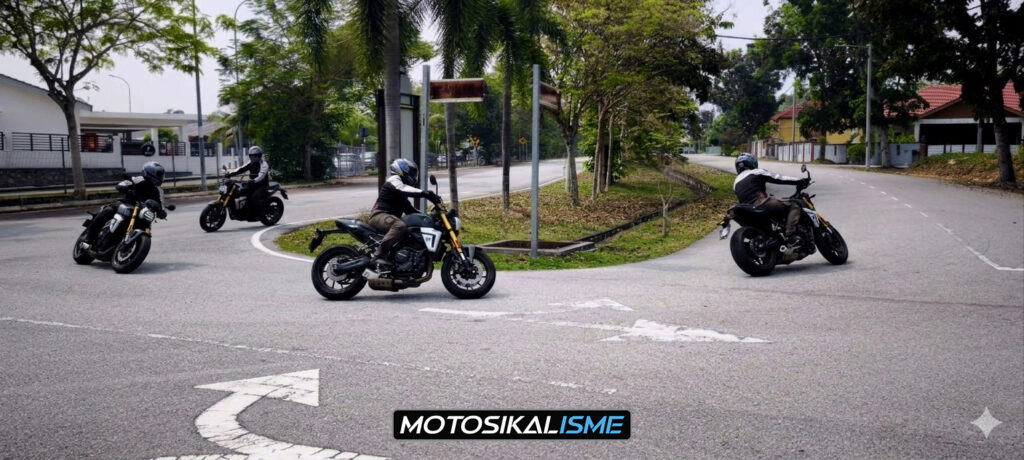
Taking corners is one of the enjoyable parts of riding a motorcycle. Especially when we can control the motorcycle smoothly, maintain stability and exit the corner without having to make sudden corrections.
However, public roads are not racetracks. Even a corner that looks easy can become dangerous if we misjudge our speed, choose the wrong line or become overconfident in our own abilities.
1. Speed When Entering a Corner
The appropriate speed depends on the shape of the corner, road surface conditions, weather, visibility and the type of motorcycle being ridden.
Do not follow someone else’s speed simply because they are riding the same type of motorcycle, as everyone has a different level of skill.
2. Choose a Safe Line
When taking a corner, make sure the motorcycle stays within its own lane. Do not run too wide and enter the opposite lane or get too close to oncoming vehicles.
On public roads, we cannot assume that the entire road surface is available for taking a racing line as we would on a racetrack.
3. Look Towards Where You Want to Go
Direct your vision towards the path you intend to take. Scan the road conditions, the positions of other vehicles and any potential hazards that may appear beyond the corner.
A blind corner may conceal a stopped vehicle, potholes, sand or a vehicle entering our path.
If visibility is limited, reduce your speed so that the motorcycle can be stopped within the distance you can see and reasonably judge to be safe.
4. Do Not Lean Too Far and Lose Grip
A motorcycle needs to lean when cornering, but the required lean angle depends on speed, corner radius, tyre condition and road surface conditions.
There is no need to force the motorcycle to lean excessively just to look impressive. On public roads, the surface is not always as clean and consistent as it is on a racetrack. Fine sand, oil, small stones and road markings that become slippery when wet can reduce tyre grip.
5. Control the Throttle Smoothly
When cornering, avoid suddenly opening the throttle or closing it abruptly, as harsh inputs can affect the motorcycle’s stability.
Prioritise control and actions that suit the situation. There is no single technique that works for every situation, as the appropriate approach also depends on the type of motorcycle being used.
5. Rain and Wet Roads
Wet roads require greater attention because tyre grip may be reduced. Standing water, oil and sand can make corners more hazardous.
Try to keep the motorcycle more upright when crossing surfaces known to be slippery.
6. Do Not Copy Other Riders’ Riding Styles
Do not let the rider in front dictate your speed. Maintain a comfortable pace, obey speed limits and do not push yourself beyond your limits.
Summary
Taking corners safely does not mean that we must ride too slowly all the time. What matters is knowing how to read road conditions, choose an appropriate speed, maintain control of the motorcycle and respect the space of other road users.
Do not enter corners too fast, do not cross into another person’s lane and do not force the motorcycle to follow another rider’s style. When road conditions are unclear, reduce your speed and give yourself more room to react.
Ride wisely, take corners under control and make sure every journey ends safely.