
SUZUKI DC-ALBOX FRAME
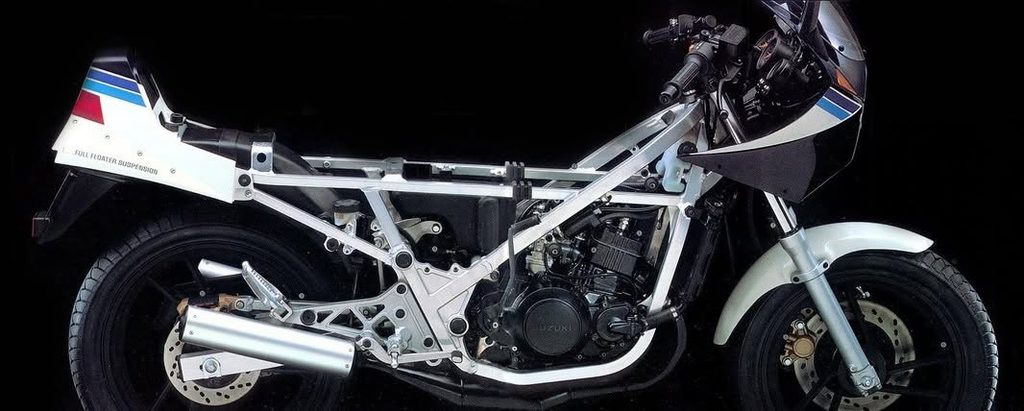
In 1983, Suzuki introduced the RG250 Gamma, a motorcycle that brought groundbreaking chassis technology to the road. It was the first mass-produced road-going motorcycle in the world to feature this unique type of aluminium frame construction.
Known as the Dual Cell – ALBOX Frame, or simply DC-ALBOX, the system represented a major departure from conventional motorcycle frame design at the time. Instead of relying on traditional round steel tubing, Suzuki developed the frame using box-section aluminium tubing, offering a combination of strength, rigidity, and reduced weight.
One of the key advantages of the DC-ALBOX design was its ability to minimise unnecessary weight. As a result, the RG250 Gamma tipped the scales at just 131 kg, an impressive figure for a production motorcycle of its era.
The significance of Suzuki’s approach becomes even clearer when compared with another motorcycle from the same category. The 1983 Yamaha RD250LC, for example, continued to use a more conventional frame construction based on round steel tubing.
This contrast between the RG250 Gamma and the RD250LC highlights just how advanced Suzuki’s DC-ALBOX technology was for its time, helping establish the RG250 Gamma as one of the most technically innovative lightweight motorcycles of the early 1980s.