ZONTES 175: Lightweight, High-Tech and Built with ZONTES DNA

At just 110 kg wet, the ZONTES 175 immediately stands out as one of the lightest scooters in the 150–200cc segment.
But that figure is more than just an impressive number on a specification sheet. It reflects the engineering approach taken by ZONTES in developing the 175 series, particularly in reducing weight without compromising structural integrity and practicality.
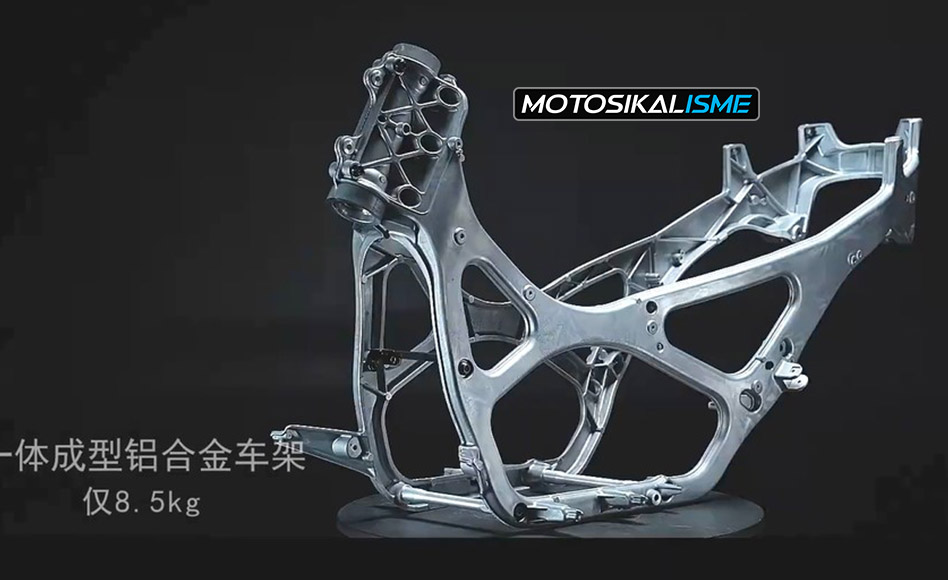
One of the major contributors to its low weight is the use of a distinctive twin-spar aluminium chassis.
For most scooter buyers, the type of chassis used may not be something they think about when choosing a motorcycle.
As long as the engine runs, the scooter is comfortable and there is enough storage space, the chassis can easily become an afterthought.
But technically, the chassis is one of the most important components of any motorcycle.
An Aluminium Chassis Weighing Just 8.5kg
The twin-spar aluminium chassis used on the ZONTES 175 is designed not only to reduce weight, but also to provide a rigid and robust foundation for the scooter.
The entire chassis reportedly weighs only around 8.5kg.
That is particularly interesting considering the role the structure has to perform.
The chassis has also been subjected to crash testing, with its structure tested against impacts from different directions, including the front, sides and rear.
The objective is straightforward: achieve a lightweight structure while maintaining the strength and rigidity required of a modern motorcycle chassis.
This is where aluminium construction becomes particularly interesting.
Reducing weight at the chassis level can have a significant effect on the overall character of a motorcycle, influencing handling, agility and how easily the machine can be controlled.
More Than Just Weight Reduction
The advantages of the ZONTES 175’s chassis design are not limited to weight reduction.
The twin-spar layout also provides engineers with greater freedom when arranging the motorcycle’s major components.
That has a direct benefit in terms of space utilisation.
Despite having a relatively sophisticated chassis structure, the ZONTES 175 provides a substantial under-seat storage compartment capable of accommodating two full-face helmets.
For a scooter, this is a significant practical advantage.
It is also a good example of how chassis architecture can influence areas that ordinary riders may not immediately associate with frame design.
A chassis is not simply there to hold the motorcycle together.
Its design can determine where other components can be positioned and how efficiently the available space can be utilised.
A 10-Litre Fuel Tank Positioned in the Centre
Another interesting aspect of the ZONTES 175 is the positioning of its 10-litre fuel tank.
The tank is located towards the central section of the motorcycle, integrated within the chassis architecture.
Centralising mass is a familiar principle in motorcycle engineering.
Keeping heavier components closer to the centre of the motorcycle can help engineers manage weight distribution and overall balance.
It also means that the fuel load can be incorporated into the motorcycle’s central structure rather than simply occupying space wherever it is available.
Again, it may not be something the average rider notices immediately.
But these engineering decisions are part of what separates a motorcycle that has simply been assembled from one that has been carefully engineered around its packaging.
Twin Shocks: A Disadvantage or an Alternative Approach?
There is, however, one aspect of the ZONTES 175 that may raise some questions.
The rear suspension uses a twin-shock setup, while a number of modern scooters have moved towards a monoshock configuration.
At first glance, this may appear somewhat conventional compared with some of its competitors.
But conventional does not necessarily mean outdated.
A twin-shock system has its own characteristics in terms of mechanical simplicity, load distribution, packaging and maintenance.
Ultimately, the important question is not whether a monoshock looks more modern than twin shocks.
The real question is how effectively the suspension works together with the chassis, geometry, weight distribution and overall tuning of the motorcycle.
That is something specifications alone cannot completely explain.
ZONTES DNA in a Smaller Package
For riders who have been eyeing the larger ZONTES 368 series, the 175 could potentially serve as an entry point into the ZONTES family.
Perhaps the 368 has already been on the wish list, but the budget simply isn’t there yet.
Starting with the 175 could be one way of experiencing the brand before eventually moving up to the larger-capacity models.
What makes the 175 interesting is that the smaller engine capacity does not mean abandoning the technology and design philosophy associated with ZONTES.
The same DNA is still evident.
It is not simply a small scooter trying to imitate a larger motorcycle.
It carries its own identity while retaining many of the technological characteristics associated with the ZONTES brand.
Premium Technology Without a Premium Price Tag
Then comes the part that will probably attract the most attention from potential buyers.
The ZONTES 175 comes equipped with a list of features that, not too long ago, would have been associated primarily with considerably more expensive motorcycles.
The equipment includes:
- TFT Display
- Tyre Pressure Monitoring System (TPMS)
- Bluetooth Connectivity
- Keyless System
- USB Charging Port
- Dual-Channel ABS
- Traction Control System
Some of these features are about convenience, while others have a direct connection to safety and rider control.
TPMS, for example, provides the rider with information about tyre pressure, while ABS and traction control are electronic rider-assistance systems designed to help manage braking and traction conditions.
Meanwhile, TFT instrumentation, Bluetooth connectivity, keyless operation and USB charging bring the kind of convenience that modern riders increasingly expect.
The interesting part?
The ZONTES 175 sits in a price bracket where such equipment is still relatively noteworthy, with its base price below RM10,000.
So, Is the ZONTES 175 Worth It?
If the ZONTES 175 is viewed simply as another 175cc scooter, it would be easy to treat it as just another option in an increasingly crowded market.
But look at the complete package and the picture becomes more interesting.
A 110kg wet weight, an approximately 8.5kg twin-spar aluminium chassis, a 10-litre fuel tank, generous under-seat storage, TFT instrumentation, TPMS, Bluetooth, keyless operation, USB charging, Dual-Channel ABS and Traction Control create a package that deserves closer attention.
Ultimately, it is not just about engine capacity.
It is about how much engineering, technology and equipment a manufacturer can deliver within a particular price bracket.
Of course, no motorcycle is perfect.
Some riders will prioritise outright engine performance. Others may prefer a monoshock suspension system. Some will put greater emphasis on Japanese brands, while others may simply want a larger and more substantial scooter.
Those priorities are entirely subjective.
But if the question is what the ZONTES 175 brings to the table for the money, its specification sheet certainly makes an interesting case.
And perhaps that leaves us with the question that matters most to motorcycle enthusiasts:
Would you buy the ZONTES 175, or is there another 150–200cc scooter you would rather have?